PLEASE NOTE: We are currently not undertaking any framing or restoration work.

THIS IS A REBUBLISHED MAP LAID ONTO CLOTH
Ref: Horwood018 Piccadilly & Green Park, 1799, Richard Horwood


Old map of London, first published circa 1799, republished by Old Folding Maps. Richard Horwood's Plan of London & Westminster, the borough of Southwark, and adjoining parts showing every house.
Extent: Old London Map Piccadilly - Pall Mall - Pimlico - Grosvenor.
Additional notable places include: Parish of St Martin's, St James Square, St Jame's Park, and the Queen's Gardens.
Industrial scale breweries were first seen in London during the 18th century where there was an easily accessible mass market for beer.
The original map was published at approximately 160" x 80" showing London in it's entirety in 1799. Old Folding Maps have republished the map in 32 sections, with each individual map at approximately 22 x 27".
When this map was published:
When this map was originally produced in the 18th century, a movement of philosophical thinkers were changing the basic foundations and hierarchy of society, questioning the traditional systems of power and faith, and the role of government across Europe. The ‘Age of Enlightenment’ saw a period of upheaval where famous thinkers pushed for the separation of church and state, the eradication of religious authority, and favoured a monarchy that ruled with the consent of its citizens. Ideas centred on liberty, equal rights, development of free thought & speech, challenged the traditional authoritarian structures, often established on faith, in favour of an order based on natural law, arguing that human scientific knowledge was based on evidence and fact, not irrationality and superstition. The movement was driven in part by new, ground-breaking scientific discoveries by scientists such as Sir Isaac Newton and by a society ground down by abuse of power, weary of the religious conflict that had dominated the previous century. Education was limited outside of the church but the industrial revolution had cheapened the printing of books and pamphlets, making educational material available to the masses for the first time. Science based on logic or reason came to the fore and organised religion was seriously questioned by the recent discovery of the underlying laws of the physical world, such as Isaac Newtons law of universal gravitation and laws of motion.
The French Revolution 1789 – 1799, heavily influenced by the thinking of this period, saw an uprising of the masses that led to the overthrowing of the government and the execution of the monarch, the last King of France, Louis XVI. It put an end to the French monarchy and took power from the Catholic church. Before the revolution France divided society into three ‘Estates’ -the First Estate encompassed the clergy, the Second Estate the nobility and the Third Estate the ‘commoners’ – peasants or urban workers that grouped the largest portion of society. The First & Second Estates enjoyed automatic privilege and power unavailable to the working classes, who were dominated by the wealthy. In 1789 the French Constituent Assembly issued the ‘Declaration to the Rights of Man and the Citizen’ which defined individual and collective rights at the time of the French Revolution. In response, Olympe de Gouges (b. 1748, France) a playwright, published ‘Declaration of Rights of Women’ in 1791, political writing in support of the French Revolution for women and resistance to oppression, which eventually led to her execution in 1793. De Gouges manifesto laid bare the natural, and inalienable, rights of women including the right to liberty, property, and security. De Gourges asserted that women are equal to women in society and argued for the right of women to vote, to seek opportunity in government, and to publicly name the father of their children, forcing men to take accountability for children born out of wedlock- including financially and removing the stigma of illegitimacy.
“Woman, wake up! The tocsin of reason is being heard throughout the whole universe; discover your rights. The powerful empire of nature is no longer surrounded by prejudice, fanaticism, superstition, and lies. The flame of truth has dispersed all the clouds of folly and usurpation. Enslaved man has multiplied his strength and needs recourse to yours to break his chains. Having become free, he has become unjust to his companion. Oh, women, women! When will you cease to be blind? What advantage have you received from the Revolution? A more pronounced scorn, a more marked disdain. In the centuries of corruption, you ruled only over the weakness of men. The reclamation of your patrimony, based on the wise decrees of nature-what have you to dread from such a fine undertaking? The bon mot of the legislator of the marriage of Cana? Do you fear that our French legislators, correctors of that morality, long ensnared by political practices now out of date, will only say again to you: women, what is there in common between you and us? Everything, you will have to answer. If they persist in their weakness in putting this non sequitur in contradiction to their principles, courageously oppose the force of reason to the empty pretentions of superiority; unite yourselves beneath the standards of philosophy; deploy all the energy of your character, and you will soon see these haughty men, not grovelling at your feet as servile adorers, but proud to share with you the treasures of the Supreme Being. Regardless of what barriers confront you, it is in your power to free yourselves; you have only to want to. Let us pass now to the shocking tableau of what you have been in society; and since national education is in question at this moment, let us see whether our wise legislators will think judiciously about the education of women.” – section of ‘Declaration of Rights of Women’, Olympe de Gourges c.1791
Darlington & Howgego 200
| Laid on cloth in a marbled slip case | £54.00 |
Small maps are laid as one piece all others are dissected - See here
All prices include VAT and free UK shipping. There may be additional charges for shipping outside the UK.

These extremely rare maps have been in existence since they were originally printed and are not modern reproductions.
Shop Now
Modern reproductions of antique maps - professionally created to closely match the original production methods.
Shop Now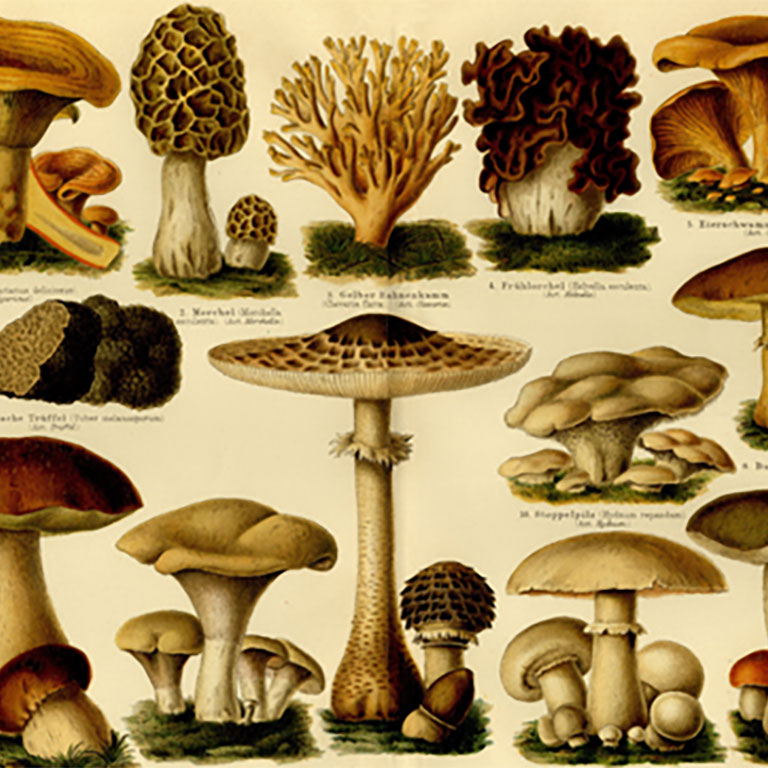
An eclectic range of antique illustrations. Available in a hand-made frame or supplied rolled in a tube.
Shop Now

A map designed by Edward Stanford (1827 - 1904) who was a map maker and seller prominent in the late 19th century.
Shop Now
Charles Booth's Descriptive map of London Poverty first published circa 1889. Available in area sectionals.
Shop Now
Horwood's Old map of London, first published circa 1799. This map is very large and is available to purchase in sections.
Shop NowAVAILABLE FROM THIS WEBSITE AND ALSO FROM:



