
THIS IS A REBUBLISHED PRINT LAID ONTO CLOTH
Ref: London003, 1650
Engraving of Cornhill in 1650 from a view published by Boydell.
When this map was published:
London As It Was And As It Is
Writing the history of a vast city like London is like writing a history of the ocean - the area is so vast, its inhabitants are so multifarious, the treasures that lie in its depths so countless. What aspect of the great chameleon city shall one select? for, as Boswell, with more than his usual sense, once remarked, "London is to the politician merely a seat of government, to the grazier a cattle market, to the merchant a huge exchange, to the dramatic enthusiast a congeries of theatres, to the man of pleasure an assemblage of taverns". If we follow one path alone, we must neglect other roads equally important; let us, then, consider the metropolis as a whole, for as Johnson's friend well says, the "intellectual man is struck with London as comprehending the whole of human life in all its variety, the contemplation of which is inexhaustible". In histories, in biographies, in scientific records, and in chronicles of the past, however humble, let us gather materials for a record of the great and the wise, the base and the noble, the odd and the witty, who have inhabited London and left their names upon its walls. Wherever the glimmer of the cross of St. Paul's can be seen, we shall wonder from street to alley, from alley to street, noting almost every event of interest that has taken place there since London became a city.
Had it been our lot to write of London before the Great Fire, we should have only had to visit 65,000 houses. If in Dr.Johnstons time, we might have done like energetic Dr Birch, and have perambulated the twenty-mile circuit of London in six hours hard walking; but who now could put a girdle round the metropolis in less than double that time? The houses now grow by streets at a time, and the nearly four million inhabitants would take a lifetime to study. Addison probably knew something of London when he called it, "an aggregate of various nations, distinguished from each other by their respective customs, manners, and interests - the St.James's courtiers from the Cheapside citizens, the Temple lawyers from the Smithfield drovers; but what would the Spectator say now to the 157,600 domestic servants, the 33,600 commercial clerks, the 31,600 carpenters, the 81,900 dressmakers, the 31,000 shoemakers, the 23,500 tailors, the 12,00 butchers, the 71,000 publicans, to which the population returns of 187,000 depose, all of whom he would have to observe and visit before he could say he knew all the ways, oddities, humours - the joys and sorrow, in fact - of this great centre of civilisation?
The houses of old London are incrusted as thick with anecdotes, legends and traditions as an old ship in with barnacles. Strange stories about strange men grow like moss in every crevice of its bricks. Let us, then, roll together like a great snowball the mass of information that time and our predecessors have accumulated, and reduce it to some shape and form. Old London is passing away even as we dip our pen in the ink, and we would fain erect quickly our itinerant photographic machine, and secure some views of it before it is gone. The history of London is an epitome of the history of England. Few great men indeed that England has produced but have some associations that connect them with London. To be able to recall these associations in a London walk is a pleasure perpetually renewing, and to all intents inexhaustible.
- Old & New London. A narrative of its history, its people, its places. Illustrated with numerous engravings from the most authentic sources.
London : Cassell, Petter, & Galpin, [1873-1878]
Thornbury, Walter, 1828 - 1876
Pigment ink, archival paper, laid on cloth.
All prices include VAT and free UK shipping. There may be additional charges for shipping outside the UK.

These extremely rare maps have been in existence since they were originally printed and are not modern reproductions.
Shop Now
Modern reproductions of antique maps - professionally created to closely match the original production methods.
Shop Now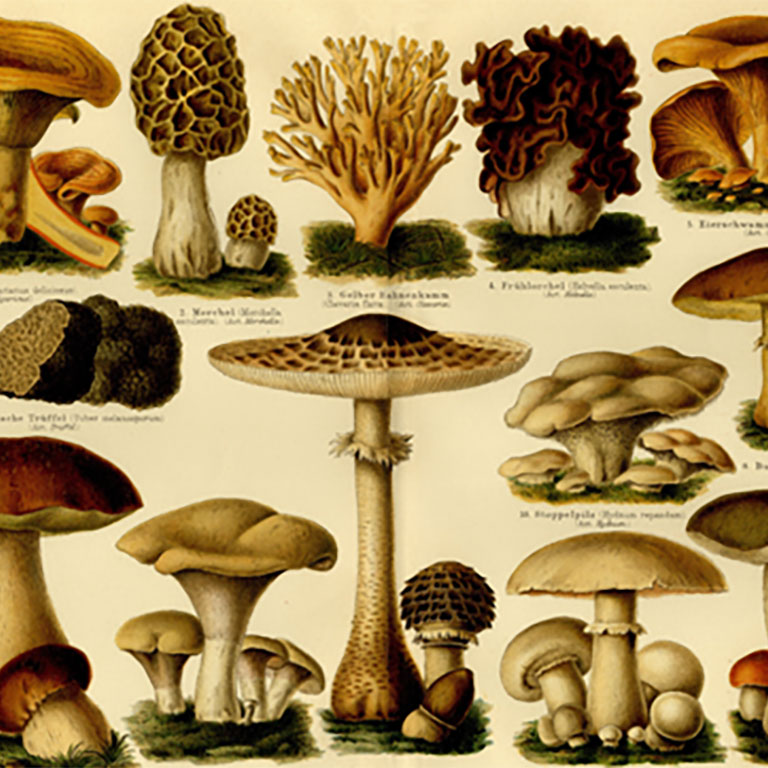
An eclectic range of antique illustrations. Available in a hand-made frame or supplied rolled in a tube.
Shop Now

A map designed by Edward Stanford (1827 - 1904) who was a map maker and seller prominent in the late 19th century.
Shop Now
Charles Booth's Descriptive map of London Poverty first published circa 1889. Available in area sectionals.
Shop Now
Horwood's Old map of London, first published circa 1799. This map is very large and is available to purchase in sections.
Shop NowAVAILABLE FROM THIS WEBSITE AND ALSO FROM:



